
*LIQUIDSCAN®
ISOLATE RARE CELLS AND EXOSOMES – CTCs, TROPHOBLASTS, EVs
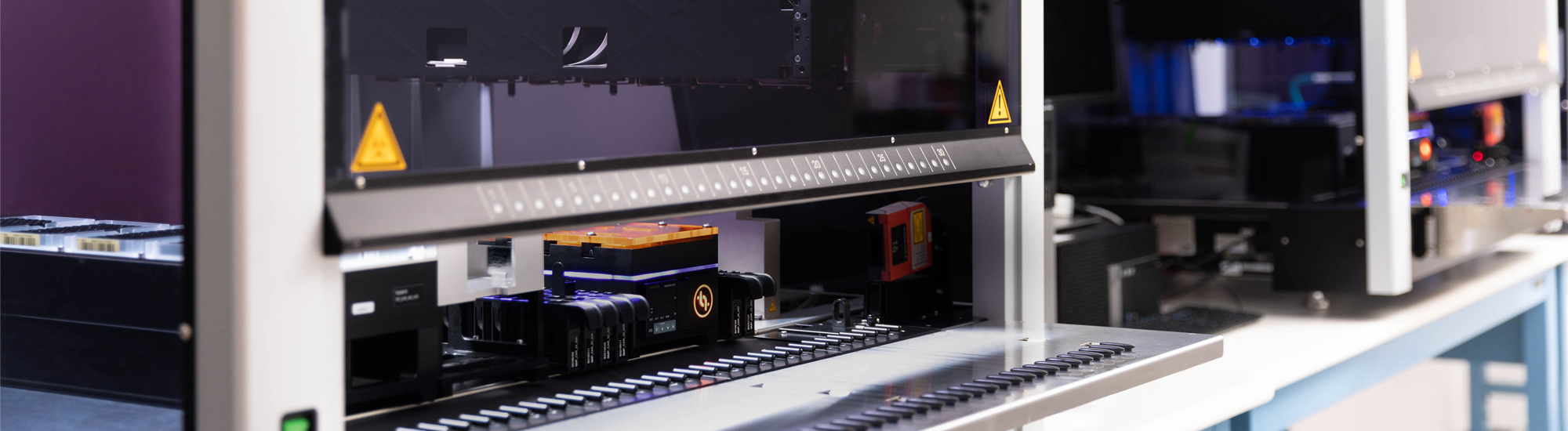
BioFluidica has created LiquidScan® as a unique fully automated system for isolating and enriching rare cells and exosomes from liquid biopsy samples. The system uses a microfluidic chip surfaced with antibodies targeting biomarkers of interest, creating the future of liquid biopsy.
LIQUIDSCAN® WORKFLOW
1
LOAD
Flow whole blood over capture chip
2
CAPTURE
Capture rare cells or exo-somesp
3
WASH
Wash to eliminate background
4
ELUTE
Elute rare cells or exosomes
5
ANALYZE
1 The BioFluidica LiquidScan hardware & software modules are integrated into the Hamilton Microlab STAR and STARlet liquid handling robot.
2 The LiquidScan Software controls loading the sample(s) onto the microfluidic chips, washing to remove background cells and cleavage and elution of captured cells or EVs from the chip.
3 The software creates a secure-loop system, two-pipette tips per chip, which dispense and aspirate simultaneously enabling relatively large volumes of liquid biopsy sample to be passed through the chip.
THE *LIQUIDSCAN SYSTEM
- LiquidScan Microfluidic Chip Processing Module
- LiquidScan Reagent Kit
(with LiquidScan Microfluidic Chips surfaced with antibodies) - LiquidScan Software
- LiquidScan installs on a Hamilton Microlab STARlet or STAR liquid handling robot
(Contact us regarding pre-owned, new or adding LiquidScan to one you already have)
*For Research Use Only.
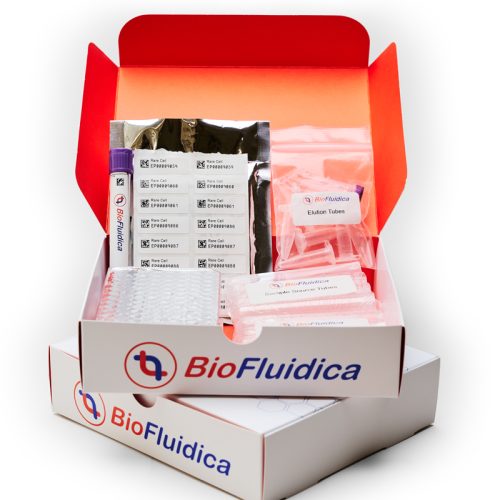
LIQUIDSCAN REAGENT KITS
- Reagent plate with contents ready to process 4 or 8 microfluidic chips
- Microfluidic chips (4 or 8):
- Antibody-surfaced sinusoidal chips for rare-cell capture or,
- Antibody-surfaced pillar chips for exosome subpopulation capture
- Sample tubes (8)
- Waste tubes or re-process sample tubes (8)

PILLAR & SINUSOIDAL CHIPS
- Microfluidic chip surface is tunable to isolate biomarkers of interest. Established for isolation of Exosomes in plasma and Rare cells in whole blood.
- Release of isolated target analytes can be optimized for downstream applications.
- Enzymatic release for evaluation of EV or Rare Cell surface markers or lyse on chip for nucleic acid or protein investigation.